
What Pain Steals from Us
Chronic pain does more than hurt. It takes our energy, spontaneity and capacity for play.

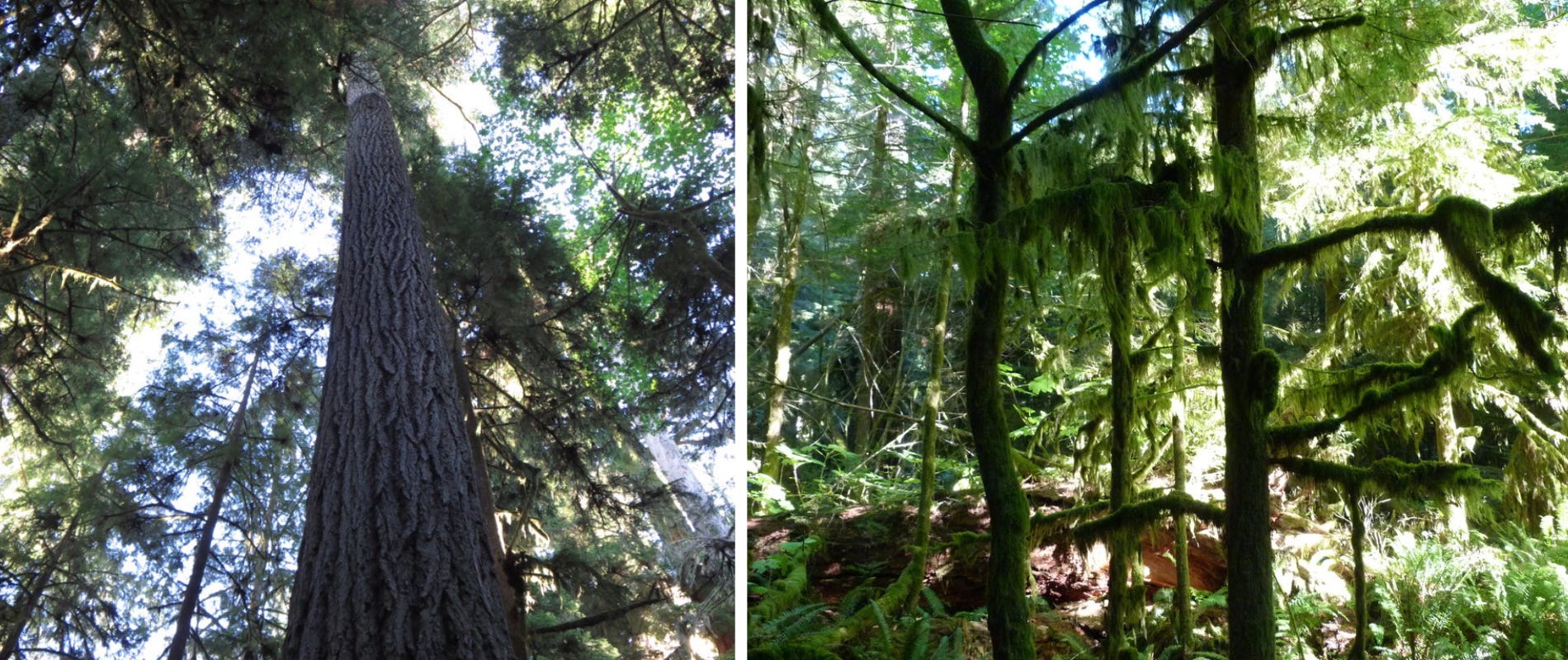
I posted photographs of two trees in today’s Nature Connections and then realised what a wonderful analogy they offer for our spines.
Does your spine help you grow tall, strong and straight, or has it become crooked and weakened by everything it has carried?
Mine is definitely more like the latter, although I’m working on becoming more like the former. I think I grew a little straighter this weekend.
When pain becomes part of life
Chronic pain has been a significant part of my life.
It began when I was a teenager, with painful periods. For two or three days every month, I wanted nothing more than to curl up in bed with a hot-water bottle and a good book. Instead, I got on with life, lying in bed with something deemed ‘normal’ was not acceptable in our household, although I did discover that light exercise sometimes helped.
Then, when I was 22 and training as a nurse, an elderly woman I was helping out of bed fell, pulling me down with her while my shoes remained firmly stuck to the floor. The result was an injured and displaced sacroiliac joint.
The painkillers I was prescribed left me feeling horrendous. I saw pink and green elephants marching across the sitting room. It felt like being drunk and hungover at the same time, and possibly like being on an acid trip, although I have never taken recreational drugs. Legal pharmaceuticals have caused me enough problems.
I used to laugh when patients said their medication was making them hallucinate. I never did again. I discovered that it was no laughing matter.
The back pain never completely disappeared, except during pregnancy, when hormonal changes loosened my joints.
When the pain became constant
Then along came the pain from endometriosis, although for a long time I didn’t know what was causing it. I will write more about that in a future article.
What began as two or three painful days around my period eventually became constant pain. At its worst, the only way I could describe it was like labour contractions that did not stop.
None of the painkillers touched it. They only left me feeling hungover and unable to function. With two young children, not functioning was not an option, especially when the medication made no difference to the pain.
I became an expert in distraction and dissociation from my body. Most people, including my husband, had no idea how severe the pain was.
Some treatments took the edge off, but it was only after a hysterectomy that most of the pelvic pain went away. The back pain remained.
Chronic pain is exhausting mentally, physically and emotionally. Even when we become skilled at hiding it, our bodies are still expending enormous amounts of energy simply trying to cope.
The parts of life research doesn’t always measure
According to the World Health Organization, an estimated 619 million people were living with lower-back pain in 2020. It is the leading cause of disability worldwide and can affect quality of life, mental wellbeing, work and engagement with family and friends. Chronic lower-back pain can also restrict participation in everyday life.
Studies often focus on whether people with chronic pain can continue working. Far less attention is given to what happens to their leisure, creativity, relationships, spontaneity and capacity for play.
Research involving 931 women with endometriosis found that the condition affected work for 51 per cent of participants and had a profound effect on relationships for 50 per cent. Quality of life was reduced across all eight dimensions measured by the SF-36v2 health survey.
Yet even these measurements cannot fully capture what pain takes from us.
We ask whether someone can work, cook, wash and dress themselves. We rarely ask whether they still have the energy to dance, laugh, explore, create or be silly. Can they play with their children? Can they do something simply because it brings them joy?
When so much of our energy is spent surviving, play begins to feel like an unaffordable luxury.
“I can’t do that because of my back”
Chronic pain had a considerable effect on how much energy I had available to expend. Non-essential activities were the first to disappear or become curtailed.
“I can’t do that because of my back,” became a frequent comment, limiting the things I did with my children and restricting my social life. I’ve never been a party animal, with hindsight probably because I never had the capacity for it.
One of the things my daughter has held against me is, “You were too busy with your own things for us.”
I did a lot with my children, but obviously not as much as they wanted or needed. Much of the time, I was not busy. I was exhausted from living with pain.
That distinction may not have been visible to them. Children only know whether we are available. They cannot be expected to understand the hidden calculations taking place inside a parent’s body: how much energy is left, what still needs to be done and whether one more activity will make tomorrow unbearable.
After attending a personal development course, I learnt to be more honest about how I felt and became better at asking for help. But it felt like too little, too late. I had already had my hysterectomy and was no longer in constant agony.
Three years later, my husband was diagnosed with leukaemia and our lives changed completely. Caring for him certainly distracted me from my own back pain, which by then was just a constant ache. I was forever shifting position in search of comfort and, after a long drive, would climb out of the car feeling and looking like an old woman.
My back was holding me back
In 2012, I attended a Heart IQ retreat. I chose not to take part in a trust fall because of my back.
Someone took me aside and said, “You know your back is holding you back.”
I knew it was, but I had come to accept the pain as simply part of who I was.
I began seeing chiropractors and osteopaths occasionally and was told there was no longer a major structural problem. I began to understand that persistent pain can continue even after an injury has healed because the nervous system has become sensitised and remains highly protective.
I started replacing the word pain with the phrase, “My back is healing.”
Gradually, the pain lessened. Since then, I have tried not to let my back decide what I can and cannot do. It still occasionally gives me a nudge to remind me it is there, but it no longer runs my life in the same way.
Reconnecting with my body
For the past 12 years, I have received regular Network Spinal care, a gentle form of chiropractic care that does not involve the type of physical manipulation most people associate with chiropractic treatment.
My practitioner, Rachael, describes it as using gentle contact with the spine to communicate with the nervous system and encourage the body to reorganise patterns of tension.
Network practitioners work from the belief that unresolved physical, emotional and chemical stresses can be held within the nervous system and expressed through tension and misalignment. This is the framework through which Rachael works, and it has been an important part of my personal experience of reconnecting with my body and emotions.
Alongside Heart IQ and the Art of Feminine Presence, it has helped me become more aware of my body, emotions and protective patterns. At 65, every aspect of my health feels considerably better than it did at 35.
These days, the work feels more like peeling back the deeper layers of an onion and reaching parts of my body that are still holding tension and defensiveness.
What surfaced during the Clear Day
Rachael regularly offers Clear Days, when up to fifteen of us come together to move through the three stages of Network care: Discover, Transform and Awaken. These sessions are interspersed with Somato-Respiratory Integration exercises.
Somato-Respiratory Integration combines breath, touch, movement and focused attention to help us explore sensations, tension and emotions held within the body.
I always find these days incredibly powerful. The energy of the group, and what we witness and learn from one another’s processes, can take personal awareness to another level.
Recently, we have been doing a lot of work to create more softness and openness around my heart. One of my intentions for this Clear Day was to experience greater expansion and access more of my playfulness.
My lower back decided it wanted to come along for the ride.
It began to hurt as I drove there. During the first entrainment, it played its old game of holding me back and drawing my attention away from the area I wanted to explore: my heart.
At one point, Rachael touched and held a place on my lower back and I began to sob. For me, tears are often a sign that something is releasing.
Images came of the first injury and all the ways my back had held me back over the years. Then came an insight I had never seen before.
It was not only movement and activity that pain had restricted. It had limited my access to play and creativity. It had even affected how much of myself I allowed other people to see, because I had become so skilled at hiding a large part of who I was.
Even writing those words brings tears to my eyes.
It was not only the pain that affected my life. It was how I learnt to cope with it.
When survival leaves no room for play
We all cope with pain differently, but I suspect many people who live, or have lived, with chronic pain will recognise some of this.
Pain can cause our world to contract. We conserve our energy for essential tasks. We weigh up each invitation and activity. We become watchful and protective. We disconnect from the parts of our bodies that hurt, and often from the emotions held there too.
Eventually, surviving can become such a familiar state that we no longer recognise everything we have lost.
As I have sat with this realisation, it has made me think about how chronic pain restricts life in ways that doctors and researchers often don’t see. Clinical assessments can measure pain levels, mobility and the ability to complete everyday tasks. They cannot easily measure or even ask about the loss of spontaneity, creativity, silliness and play.
And rarely do they see or ask about the emotional and bodily disconnection many of us develop as a way of coping.
Looking at the interconnected whole
During the final entrainment, Rachael offered me other insights that I am still exploring and will probably write about. Writing helps me understand my own thought processes, and I hope that sharing them may help others too.
I sense that these insights are also connected with both the pain and the loss of play. That makes sense to me because the body is an interconnected system. No part of us works entirely in isolation.
One of my frustrations with conventional Western medicine is that it divides the body into separate systems and specialities. This is invaluable when specialist expertise is needed, but it often misses the relationship between our physical symptoms, nervous system, emotions, experiences and environment.
We need both detailed medical knowledge and a wider view of the person living inside the body. I long for the day when health care in holistic or what I like to call wholistic.
I am not suggesting that everyone with chronic pain will benefit from the same approaches that have helped me. We are all unique, but worth exploring if they resonate.
Network Spinal care and Somato-Respiratory Integration are available in many countries, and I have personally found them invaluable.
What matters most is recognising that managing pain is not only about reducing a physical sensation. It is also about reclaiming the parts of life that pain has pushed aside.
Perhaps healing is not simply standing straighter or hurting less.
It’s possibly having enough space within ourselves to play and be creative again.
The factual references are supported by the WHO’s lower-back-pain fact sheet and the EndoCost quality-of-life findings.
Daughter of the Solstice, my first novel in the Gaea Remembered Series is now available on Amazon and from Book.by.
Beyond Hot and Crazy - A Radical Guide to Living Well with Menopause is available on Amazon and from Book.by.